
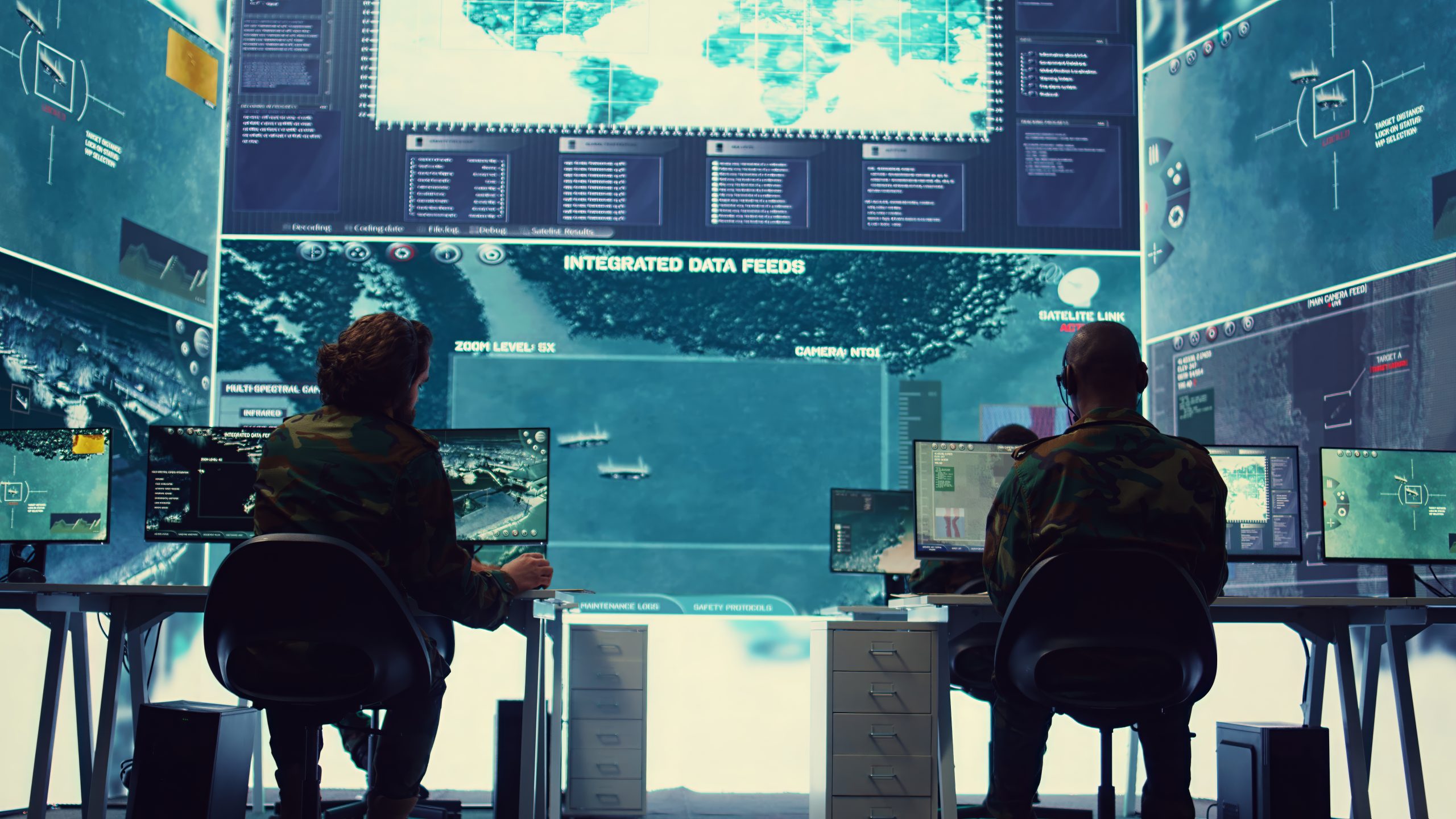
Ensuring the safety of our nation has always relied heavily on border security, which has become increasingly intricate due, to advancements. Drones, also known as Unmanned Aircraft Systems (UAS) have now taken on roles as assets for surveillance and potential threats in this domain. While they offer advantages in terms of monitoring and information gathering their misuse for purposes, like smuggling and unauthorized spying poses dangers. Therefore it is crucial to prioritize bolstering border security through the implementation of Counter UAS (cUAS) solutions.
Understanding Counter-UAS (cUAS) Technology
Counter-UAS technology refers to the set of systems that have the mission of detecting, identifying and/or neutralizing unauthorized drones. Such systems are rather relevant to ensure the non-interference of drones with critical sectors and processes. The key components of cUAS technology include:The key components of cUAS technology include:
- Detection Systems: The types include radar detection where the drones are hydrophobic and emit radio waves, RF sensors, and electro-optical/infrared (EO/IR) cameras.
- Identification Systems: Identifying friendly from hostile drones by means of use of new algorithms and databases.
- Neutralization Systems: Measures including jamming, spoofing or even the physical capture of threats as a way of dealing with them.
- Layered Defense: Applying the general concept of multiple layers of protection, in which different methods of detection and neutralization are used to provide maximum protection.
- Integration with Existing Systems: Making sure that the new system will work and integrate well with current security technology in place to increase efficiency.
Integration: The Key to Effective Border Security
The efficiency of cUAS technology rises to a new level when it is implemented along with other border security tools. Such integration enables one to implement an amalgamated approach using the pros of the technologies it connects. Key aspects of this integration include:Key aspects of this integration include:
- Unified Command and Control: It is necessary to unite the management of such procedures as detection, identification, and neutralization to provide the effective handling of threats.
- Interoperability: Capable of integrating cUAS systems with other security technologies; including surveillance cameras, ground sensors, etc.
- Real-time Data Sharing: The improvement of the speed of communication between various security organizations and departments increases the awareness of the situation and decision-making.
- Training and Support: Continual staff training to ensure that the security personnel are well equipped in the use of the integrated systems and new technologies.
- Scalability: Designing solutions that will be easily adaptable for more detail, or more simplistic depending on the regions and the threat levels of those specific borders.
Real-World Applications of Integrated cUAS Solutions
Various cUAS contexts are being developed to act as integrated cUAS solutions to boost the borders’ security. Some notable examples include:
- Preventing Smuggling: Drones are used more and more frequently to transport forbidden items through territorial borders. cUAS systems that are integrated into one platform can identify and neutralize such drones hence Actor cannot smuggle these commodities into the country.
- Securing Sensitive Areas: The sources, objectives, and technology of border regions are usually sensitive. These areas are safeguarded against reckless drones by integrated cUAS solutions.
- Supporting Law Enforcement: Bigger conventions like FIFA world cups and other massive events are some of the areas where integrated cUAS systems help law enforcement organizations to oversee the security and order.
- Monitoring Migration Routes: Drone can effectively be employed in controlling and overseeing migration routes so as to increase security to whoever is migratory as well as the security officers.
- Environmental Protection: Preserving the natural reserves and continuances of wildlife sanctuaries with unlawful activities including poaching and deforestation adjacent borders.
The Role of AI and Machine Learning in cUAS
The objective of AI and Machine Learning in cUAS is to fundamentally enhance security.
Now, cUAS is being complemented with AI/ML in order to improve the detection and identification of threats. Machine learning approaches embedded in AI-based diagnostic systems can also perform complex analysis of huge amounts of data in proximity to real time, resulting in enhanced ability to detect threats. Since machine learning is used in developing algorithms, the cUAS systems feature a learning approach based on the obtained data, which can help detect new technologies used in drones or terör tactics. Some key aspects include:
- Pattern Recognition: Here, it is possible to use AI to analyze activity scenarios that are difficult for a drone to handle, as well as the activity itself, and thus to distinguish between normal activity and a threat.
- Automated Decision Making: Superior decision-making speed is possible as the decision-making is confined to fundamental requirements eliminating the subjectivity of the human operator.
- Predictive Analytics: The ML algorithms make it possible to determine possible future drone activity from the recorded data to prevent harm.
- Continuous Improvement: AI systems are trained with new data, thus enhancing the outcome of the techniques used in the system.
- Enhanced User Interface: AI consists in depersonalized processing of information through its simplification and representation in formats that can be easily comprehended by the operators.
Challenges and Considerations in cUAS Implementation
Despite the evident advantages of integrated cUAS solutions, it is essential to look at the implementation of the solutions and discover the challenges associated with it. Key considerations include:
- Regulatory Compliance: This is a major highlight since getting to ensure that the cUAS systems meet the national and international regulations is important in deployment.
- Privacy Concerns: It is always difficult to provide compromises between security measures, where on one hand personal security is important, and privacy, on the other hand.
- Technological Evolution: cUAS systems must thus be updated since the technology of drones is growing and developing more threats are created.
- Cost: Advanced cUAS systems are best developed and maintained as they might call for a lot of investment.
- Training and Expertise: Implementation of cUAS solutions also involves human resource and capacity development to meet the changes in technology.
Future Trends in Border Security
The continuation of integration of advanced technologies is the future of border security measures. Some emerging trends include:
- Autonomous Systems: Autonomous cUAS systems that can work independently from operators in particular will improve the response time of the operation.
- Enhanced Collaboration: Increased cooperation between the countries and security forces will ensure that everybody can adopt the best practices and technology.
- Cybersecurity Integration: Combining cybersecurity with cUAS technology will help guard systems against cyber intrusion plans.
- Advanced Sensor Technology: Further product development of cUAS sensors will enhance the means of reliable detection at greater distances.
- Public-Private Partnerships: As the outcome of the direct cooperation between governmental bodies and private enterprises, a new generation of border protection tools and methods will be developed.
Conclusion
At Envision Beyond we have realized that borders are significant fronts that need protection from emerging threats. The marketed end-to-end cUAS solutions are laid out to offer integrated security solutions through the help of the step forward technologies and fewerse best practices.
We specialized in cUAS technology and give solutions that require understanding the requirements of the client. Consequently, our systems are not invasive; they were developed to blend in with the pre-existing techniques for security with an aim of creating a harmonized system for dealing with threats. Company’s compliance, regulatory and privacy concerns are thought of highly and their solutions conform to it.